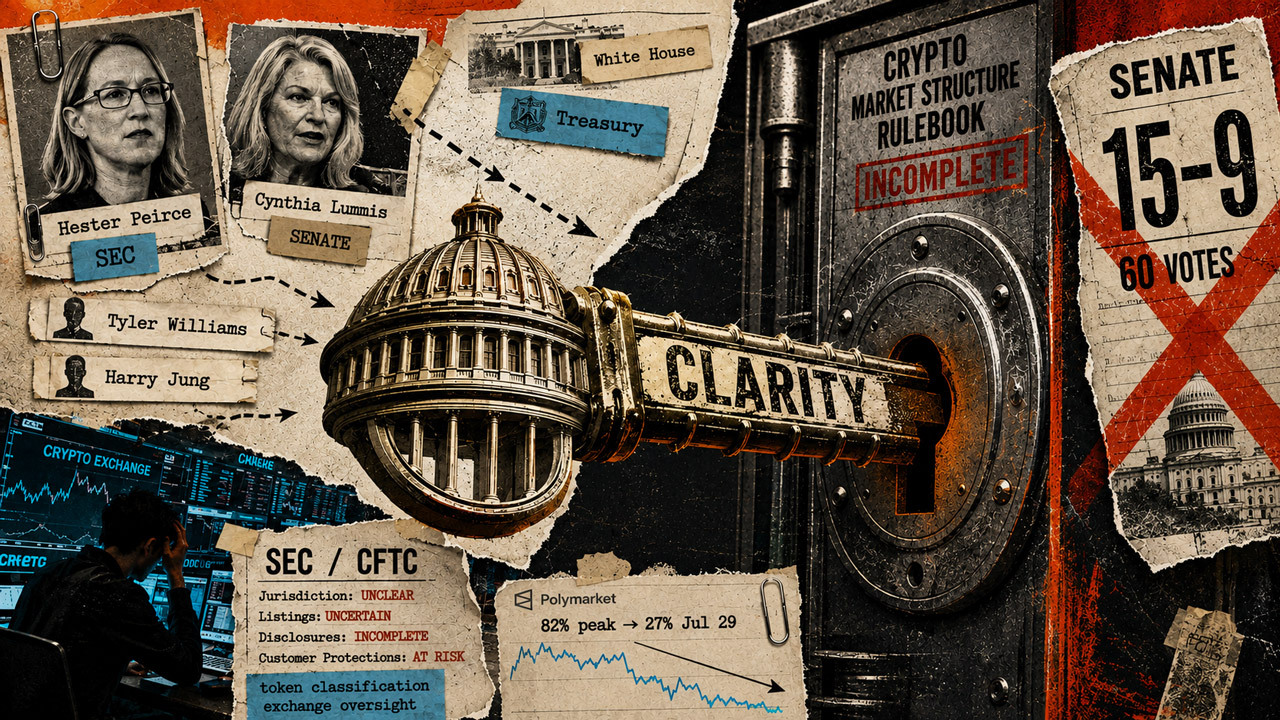


Tyler Williams served as Secretary Scott Bessent’s principal adviser on blockchain and digital asset policy, making him one of Treasury’s top voices on US crypto regulation. He is returning to the private sector after leaving his post on July 31.
His exit is the fourth senior crypto departure from a position of federal power this year, and it comes before Congress has finished the legislation that will decide who regulates digital assets.
Harry Jung announced on July 20 that he would leave the White House Crypto Council within two weeks, ending his run coordinating digital asset policy between agencies, Congress and the administration.
Hester Peirce, who leads the SEC’s Crypto Task Force, plans to leave the agency later this year.

Cynthia Lummis, chair of the Senate Banking Committee’s digital assets subcommittee, has already said she won’t seek re-election and will leave the Senate when her term ends in January 2027.
That is a compressed succession problem across Treasury, the White House, the SEC and the Senate.
OfficialPower centerRole in crypto policyWhy the exit mattersTyler WilliamsTreasuryAdvised Scott Bessent on blockchain and digital asset policyTreasury helps shape stablecoin implementation, banking rules and illicit-finance policyHarry JungWhite HouseCoordinated digital asset policy across agencies, Congress and the administrationWhite House coordination matters while CLARITY remains unfinishedHester PeirceSECLeads the SEC Crypto Task ForceHer work affects token classification, disclosures and registration pathsCynthia LummisSenateChairs the digital assets subcommitteeHelped write and negotiate market-structure legislation
Why the rulebook still lacks durability
Congress still hasn’t finished the rulebook these four people spent years building toward. The CLARITY Act cleared the Senate Banking Committee by a 15-9 vote, but it still needs a floor vote and 60 votes to survive a Senate filibuster.
The House already passed its own version, H.R. 3633, by 294-134 in July 2025. Ethics provisions, banking-industry opposition and a Senate calendar squeezed by the midterms sit between committee passage and a president’s signature.
The industry already has one law on the books, as the GENIUS Act set federal rules for stablecoins last year. Market structure oversight, the rules covering how everything else gets classified and traded, is still stuck in Congress.
CLARITY would settle where SEC authority ends and CFTC authority begins, assigning the CFTC jurisdiction over digital commodity spot markets while the SEC retains authority over securities and investment contract assets.
That boundary decides which exchanges can list a given token, what disclosures a project owes buyers, and which regulator an investor can turn to when a platform fails.
The Senate version of CLARITY would also set registration rules for digital commodity exchanges, brokers, and dealers, covering disclosures, conflicts of interest, financial responsibility, cybersecurity, and customer asset protection.
Without the statute, platforms keep making listing, custody, and product decisions under agency interpretation, enforcement posture, and state rules that can change without a vote in Congress.
Each departure removes a specific function from that unfinished process. Williams coordinated Treasury’s side of stablecoin implementation, bank guidance and illicit-finance rules, while Jung linked the White House, Congress and the agencies daily.
Peirce’s task force is the group drafting how token classification and registration would work inside the SEC, and Lummis helped write the market-structure bill and negotiate it through committee.
Replacements can keep the same policy direction, but they inherit unfinished negotiations and technical details that took two years to build.
Unfinished issueWhy it matters to investorsWithout CLARITYWith CLARITYToken classificationDetermines whether an asset is treated as a security or commodityStatus can shift through agency action or litigationClearer SEC/CFTC boundaryExchange oversightAffects which platforms can list and trade assetsPlatforms operate under uncertain federal rulesRegistration path for digital commodity exchangesDisclosuresDetermines what projects must tell buyersInvestor information remains unevenMore standardized disclosure obligationsCustody rulesAffects how customer assets are protectedRules remain fragmented across agencies and statesFederal customer-asset protection frameworkEnforcement recourseDetermines which regulator investors turn toJurisdiction can remain disputedClearer regulator responsibility
Two paths for US crypto regulation
US crypto regulation still has plenty of supporters in Washington. Paul Atkins chairs the SEC and Mark Uyeda sits as commissioner, and the agency can legally operate with only two seats filled.
Patrick Witt, the White House crypto council’s executive director, deferred military training to stay in his post through the CLARITY negotiations.
Senate Banking Chair Tim Scott and senators, including Bill Hagerty, continue to push the bill, and the industry itself has kept spending. Crypto interests have put close to $200 million into the 2026 midterm cycle, up from about $170 million in 2024.
Betting markets show less confidence than the political math implies, as odds of CLARITY passing in 2026 fell from an 82% peak in February to 32% by mid-July, with Polymarket pricing the odds at 27% by July 29.
The bull case is that Senate negotiators resolve the ethics and banking objections and move CLARITY to a floor vote before the pre-recess window closes.
Whoever replaces Williams, Jung, Peirce, and Lummis would inherit an existing statute, and market-structure oversight would retain the durability that stablecoins gained under the GENIUS Act. Exchanges and token issuers get a settled path from that point forward.
The bear case has the Senate calendar and the personnel gap arriving together. Peirce’s SEC exit lands while Lummis serves out a final year with less influence in the chamber, and midterm politics crowd out the floor time CLARITY needs before the window closes. US crypto regulation stays pro-industry in tone under Atkins and Scott.
The classification, registration, and disclosure rules investors need would continue to be shaped through agency memos and enforcement decisions, with no statute behind them.
ScenarioWhat happens in WashingtonWhat investors getMain riskBull caseSenate resolves ethics and banking objections, then moves CLARITY to a voteA more durable federal market-structure frameworkImplementation shifts to new officials, but under a statuteBase caseCLARITY remains alive but slips past the near-term windowContinued agency guidance and partial rulemakingPolicy stays pro-crypto but not permanentBear casePersonnel turnover and midterm politics stall the billUnclear token, exchange and disclosure rules remainMarket structure depends on agency discretionReversal riskFuture officials reinterpret unfinished rulesListings, compliance paths and enforcement posture can shift againCrypto wins policy momentum but not durability
The officials who spent two years turning the crypto coalition into technical policy are leaving anyway, and their replacements inherit a bill that still hasn’t passed.
Investors are still waiting for durable US crypto regulation, and the people best placed to finish the rulebook are heading out the door before Congress makes it permanent.