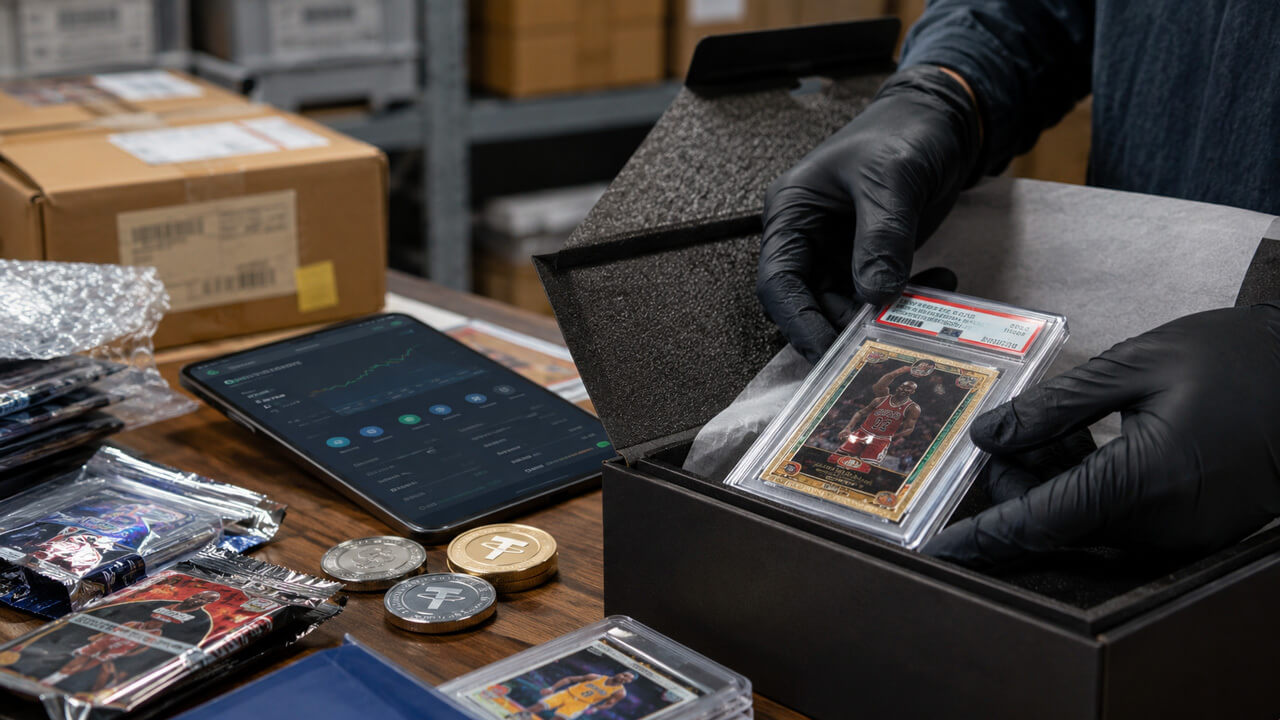


Collector Crypt is turning crypto’s RWA debate into a consumer stress test: randomized card packs, USDC sellbacks, physical redemption, and CARDS incentives are producing activity outside the tokenized Treasury model crypto usually uses to sell RWAs.
The CARDS ticker moved through crypto circles on X after Arthur Hayes amplified it on June 23. That social heat explains attention; value, sustainability, and durable collector demand still rest on operating behavior.
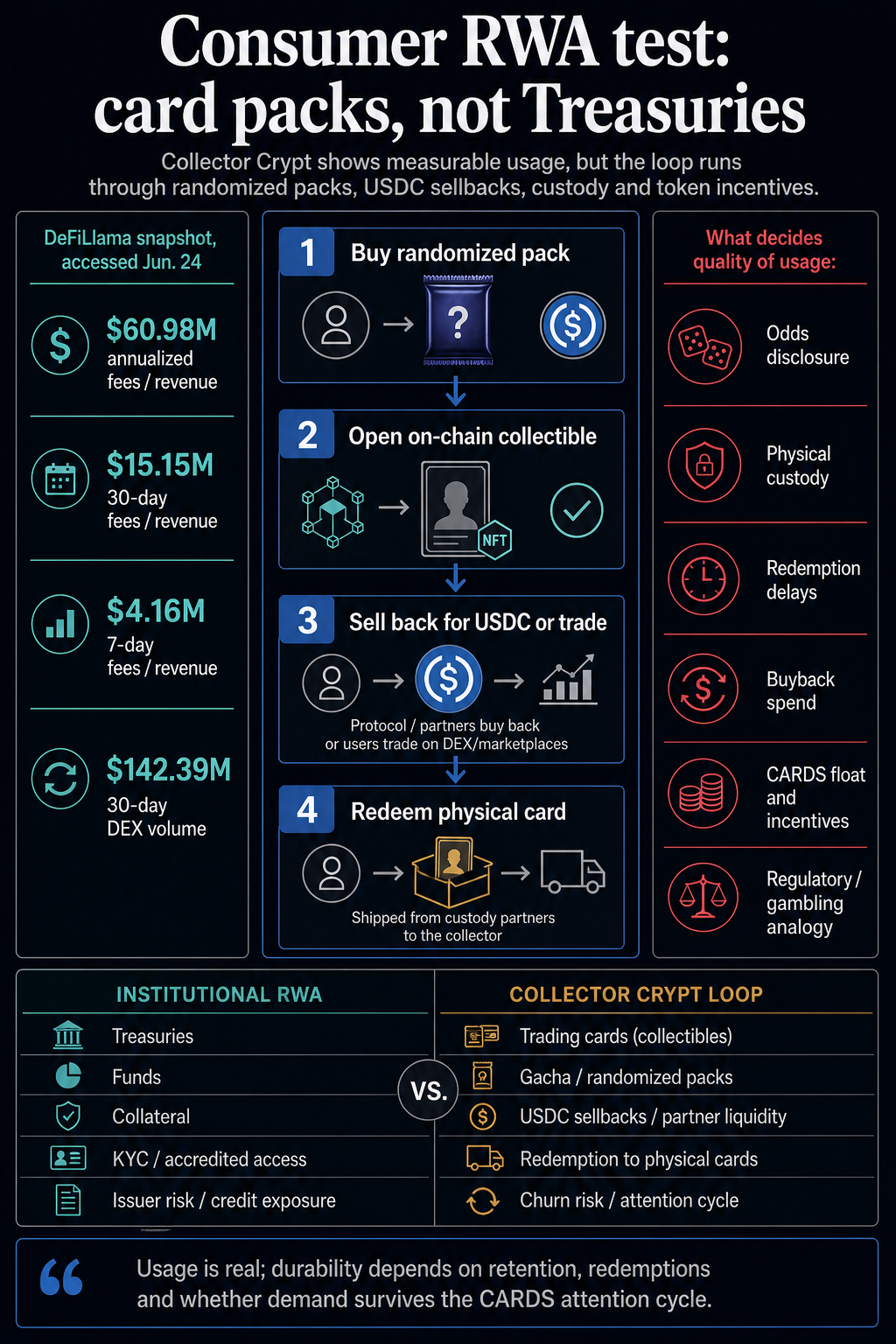
The operating data is harder to ignore. On June 24, DeFiLlama’s Collector Crypt dashboard showed $60.98 million in annualized fees and revenue; $15.15 million over 30 days; $4.16 million over 7 days; and $142.39 million in 30-day DEX volume.
DeFiLlama also breaks down pack sales, marketplace transactions, and pack buybacks, making the activity easier to inspect than in most consumer crypto apps.

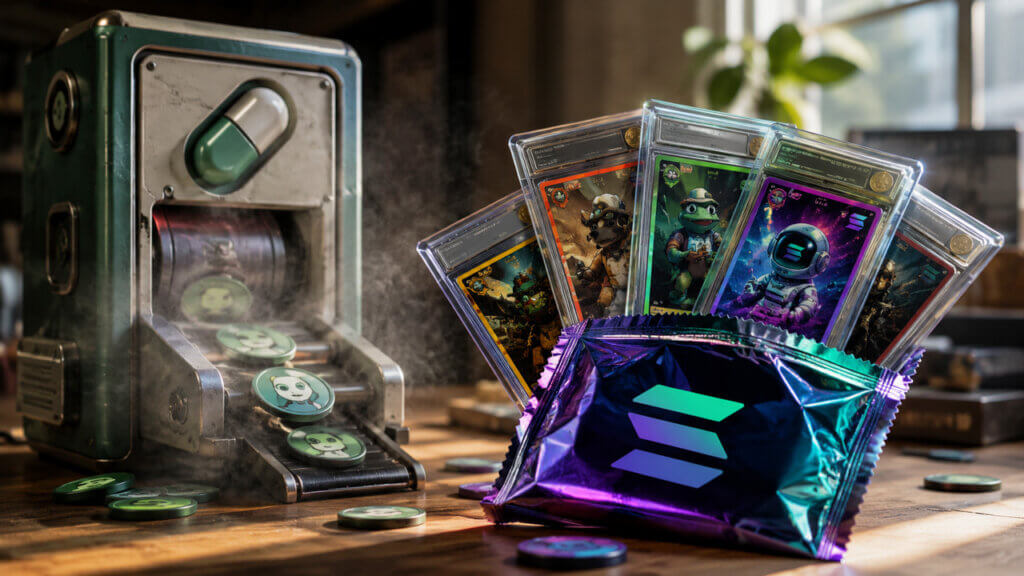
Those figures give Collector Crypt a real usage case. They also demand a different kind of scrutiny.
DeFiLlama’s general definitions treat fees as user-paid protocol fees and revenue as the protocol-retained subset, while Collector Crypt’s protocol page further defines its own fee and revenue metrics around pack sales, marketplace activity, and pack-buyback adjustments. Dashboard revenue remains an unaudited operating signal.
Can a consumer-RWA app keep users paying for real assets once the incentive and attention cycle has cooled?
Card packs become the RWA interface
Collector Crypt’s official site describes the platform as a bridge to real-world collectibles, allowing users to digitize their collections and trade them.
Its docs make the loop more concrete: users can purchase mystery packs, open randomized NFTs, see live machine information, and use buyback endpoints tied to USDC.
The same documentation also explains why the product sits in a more complicated corner of RWA than tokenized Treasuries.
Collector Crypt’s gacha API supports pack purchase, random NFT opening, and sellback mechanics. Its VRF documentation supports verifiable randomness and live-weight claims.
Its shipping API describes a redemption path for physical delivery of underlying cards through a submit, pay, and burn flow.
That is real-world asset infrastructure, but the user behavior is closer to a collectible arcade than to an institutional collateral market. The asset is a card. The action is opening a pack.
The liquidity path can include an immediate USDC sellback or secondary trading. The risk spans odds disclosure, card valuation, custody, redemption, incentives, and the token within the ecosystem.
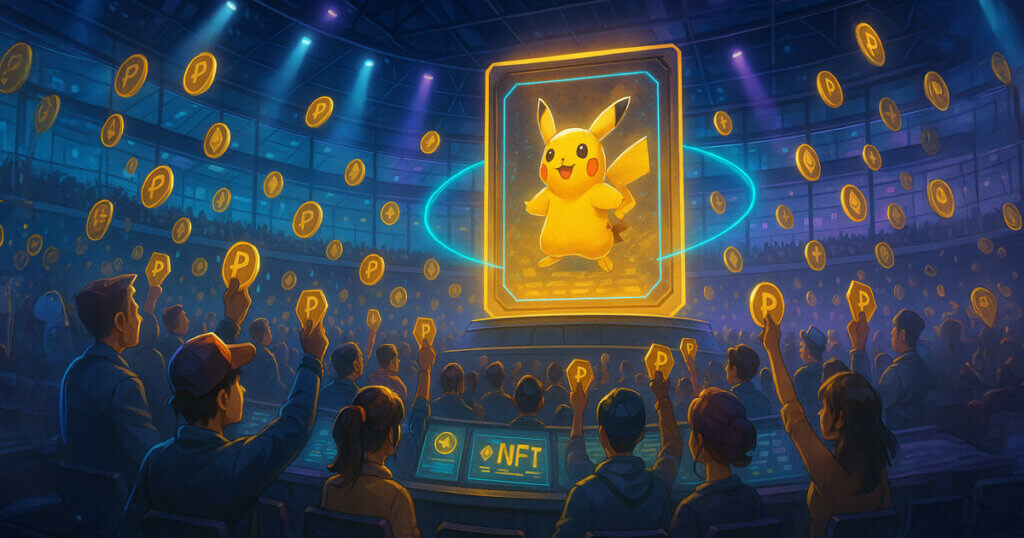
ModelMain assetUser actionLiquidity pathRisk focusInstitutional RWATreasuries, money-market funds, creditAllocate capital or use collateralRedemption, settlement and DeFi integrationKYC, custody, yield, issuer and regulatory structureCollector Crypt loopPhysical trading cards represented on-chainBuy or open randomized packs, trade or redeem cardsUSDC sellbacks, marketplace activity and physical redemptionOdds, buybacks, card custody, redemption, token incentives and player churn
CryptoSlate has already covered how Collector Crypt’s card-pack week changed Solana‘s consumer revenue conversation. The category-level question now is how much of that activity survives after attention shifts.
If consumer RWA usage is arriving through gacha mechanics, the sector’s most energetic retail loop may carry a risk profile that institutional RWA buyers rarely face.
The best case for Collector Crypt is simple: consumer RWA often sounds abstract until users pay to interact with real assets.
Collector Crypt gives users a concrete object, a game-like opening experience, secondary-market liquidity, and a possible physical redemption path. DeFiLlama’s fee and volume data show that the loop has generated measurable on-chain activity.
That makes it different from much of the broader RWA sector. CryptoSlate’s prior RWA coverage has framed tokenization growth around Treasuries, money-market funds, credit, and assets that often sit outside active DeFi usage.

Collector Crypt is smaller than the institutional market, yet it is more visibly consumer-facing.
The weaker case is just as direct. A pack-opening economy can look healthy even as attention, buybacks, and rewards rise together.
The dashboard can show activity while leaving unresolved how much demand comes from collectors who want the underlying cards, how much comes from traders rotating through the loop, and how much comes from users chasing incentives or social proof.
Float and custody decide the quality of usage
That distinction is central to the CARDS debate. As of press time, CryptoSlate’s coin page shows a CARDS price of around $0.27 per token, up 66% over the last month but down 13% in the last week. It has a market cap of roughly $111 million, a 24-hour trading volume of roughly $22.8 million, a circulating supply of roughly 416 million, and a total supply of 2 billion.
That spread turns float, unlocks, and market cap into risk variables instead of a stable valuation base. If users are buying packs for cards and redemption, CARDS is one part of the ecosystem.
If attention shifts toward the token and rewards, the loop can become more reflexive.
The physical card is what keeps Collector Crypt inside the RWA conversation. It is also where the hardest consumer questions sit. A user can own an on-chain representation, trade it, or seek physical delivery through the documented redemption flow.
The dashboard leaves the hardest off-chain questions unanswered: who holds the card, how grading or insurance disputes are handled, how redemption delays are resolved, and how much value actually leaves the platform as card ownership instead of being recycled into more pack openings.
A June 11 Solflare and Collector Crypt release about Solflare Packs underscores the risk split.
It describes randomized packs, odds shown before purchase, 18+ gating, and language classifying the packs outside financial products and investment offerings. It also separates Solflare from responsibility for sourcing, fulfillment, grading, storage, and redemption.
Those disclaimers are useful because they say the quiet part out loud about consumer RWA. The experience can be on-chain, but the trust chain reaches into warehouses, shipping processes, grading standards, partner interfaces, and buyer behavior.
The regulatory analogy also differs from tokenized Treasuries. The New York Attorney General’s February action against Valve focused on paid randomized rewards with monetary value and cash-out paths in a gaming context.
For Collector Crypt, that kind of enforcement attention is a risk signal for paid randomization with resale value. The current source set supports that point as an analogy for platform design, separate from any regulator accusation against the project or its partners.
Retention is the signal to watch
Collector Crypt has already cleared one hurdle that many consumer crypto apps rarely reach: visible activity that can be tracked outside the project’s own marketing.
DeFiLlama’s protocol page, the official gacha and redemption docs, the CARDS market feed, and the social activity around pack partners all point to a real product loop.
The unresolved question is the quality of that loop. Durable consumer RWA would show users returning for cards, retaining or redeeming physical assets, trading because the collectibles have independent demand, and accepting transparent odds with less reliance on constant rewards.
Reflexive gacha churn would look different: volume clustering around incentives, buybacks, social streaks, token unlocks, and attention spikes.
The best answer today sits between those outcomes. Collector Crypt is proof that consumer RWA can generate real usage dashboards, while the mechanism that produced those dashboards looks more like randomized collectibles and less like the institutional RWA model crypto usually sells to investors.
That makes the next data points more important than Hayes’ post or any single CARDS price move.
Watch repeat users, redemption rates, card retention, buyback spend, official confirmation of CARDS buyback mechanics, partner-pack expansion, and CARDS behavior after the current attention cycle. Those signals will show, with better analytics, whether Collector Crypt is building a consumer-ownership market or a gacha flywheel.