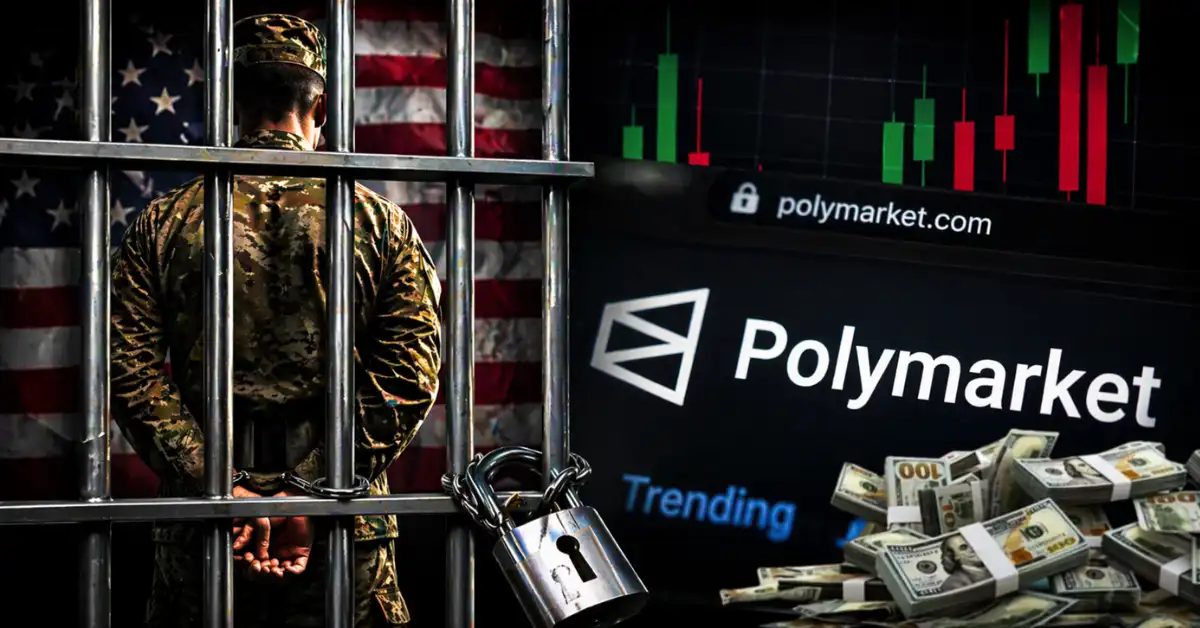


A new study by Stanford University and Singapore Management University says Polymarket’s five-minute Bitcoin prediction markets may have given sophisticated traders an unfair advantage. After analyzing nearly 16,000 Bitcoin contracts over two months, researchers found trading patterns that suggest some participants were able to briefly move Bitcoin’s price just before settlement. As a result, some participants could profit from it.
How the Strategy Worked
Polymarket’s five-minute contracts let users bet on whether Bitcoin would end above or below a certain price. Since the result depended on a single Chainlink price feed at one exact moment, traders holding large positions allegedly placed concentrated trades in the final seconds. Consequently, they could nudge Bitcoin’s spot price in their favor.
The study identified 821 suspected manipulators who are estimated to have earned around $8.2 million. Another estimate in the report suggests about $1.28 million was effectively transferred from ordinary traders to these participants during the study period.
Researchers also found Binance trading volume jumped to nearly 3.9 times its normal level during settlement windows. Bitcoin’s price often snapped back just seconds after the contracts closed. At the same time, they noted they couldn’t directly prove the Binance traders and Polymarket wallets belonged to the same people. Therefore, they called the evidence circumstantial.

Researchers Think the Fix Is Simple
The report found that the manipulation issue mostly went away when contract times were extended from five minutes to fifteen minutes. It also suggested using a time-weighted average price (TWAP) instead of a single settlement price. This would make it much harder for someone to sway the result with a quick price spike.
Polymarket said it doesn’t believe any manipulation happened, but it did confirm that it plans to add average-price settlement for some markets over the next year. Binance said it already monitors activity on its own platform. However, it can’t control how third-party prediction markets decide to settle their contracts.
Why It Matters Beyond Crypto
The researchers say this isn’t just a crypto issue. As firms like Cboe expand event contracts tied to the S&P 500 and Nasdaq pursues similar products, the same settlement risks could appear. This could happen if contracts rely on a single price snapshot.
The findings also come as prediction markets continue to boom. According to DefiLlama, Kalshi processed about $9.4 billion in June trading volume, while Polymarket International handled roughly $4.3 billion.
The expanded 2026 FIFA World Cup played a huge role, generating more than $5.4 billion in combined trading volume. Polymarket contributed about $4.25 billion and Kalshi around $1.2 billion. Researchers say better settlement models could make these fast-growing markets much harder to exploit.
Apart from that, prediction markets are also facing growing regulatory scrutiny. U.S. states have challenged platforms like Kalshi and Polymarket. Meanwhile, the CFTC argues it has the main authority over federally regulated event contracts. The dispute is now in federal courts and could eventually reach the Supreme Court.
Was this writing helpful?
Story Ends Here
Trust with CoinPedia:
CoinPedia has been delivering accurate and timely cryptocurrency and blockchain updates since 2017. All content is created by our expert panel of analysts and journalists, following strict Editorial Guidelines based on E-E-A-T (Experience, Expertise, Authoritativeness, Trustworthiness). Every article is fact-checked against reputable sources to ensure accuracy, transparency, and reliability. Our review policy guarantees unbiased evaluations when recommending exchanges, platforms, or tools. We strive to provide timely updates about everything crypto & blockchain, right from startups to industry majors.
Investment Disclaimer:
All opinions and insights shared represent the author’s own views on current market conditions. Please do your own research before making investment decisions. Neither the writer nor the publication assumes responsibility for your financial choices.
Sponsored and Advertisements:
Sponsored content and affiliate links may appear on our site. Advertisements are marked clearly, and our editorial content remains entirely independent from our ad partners.
Read the Next News